
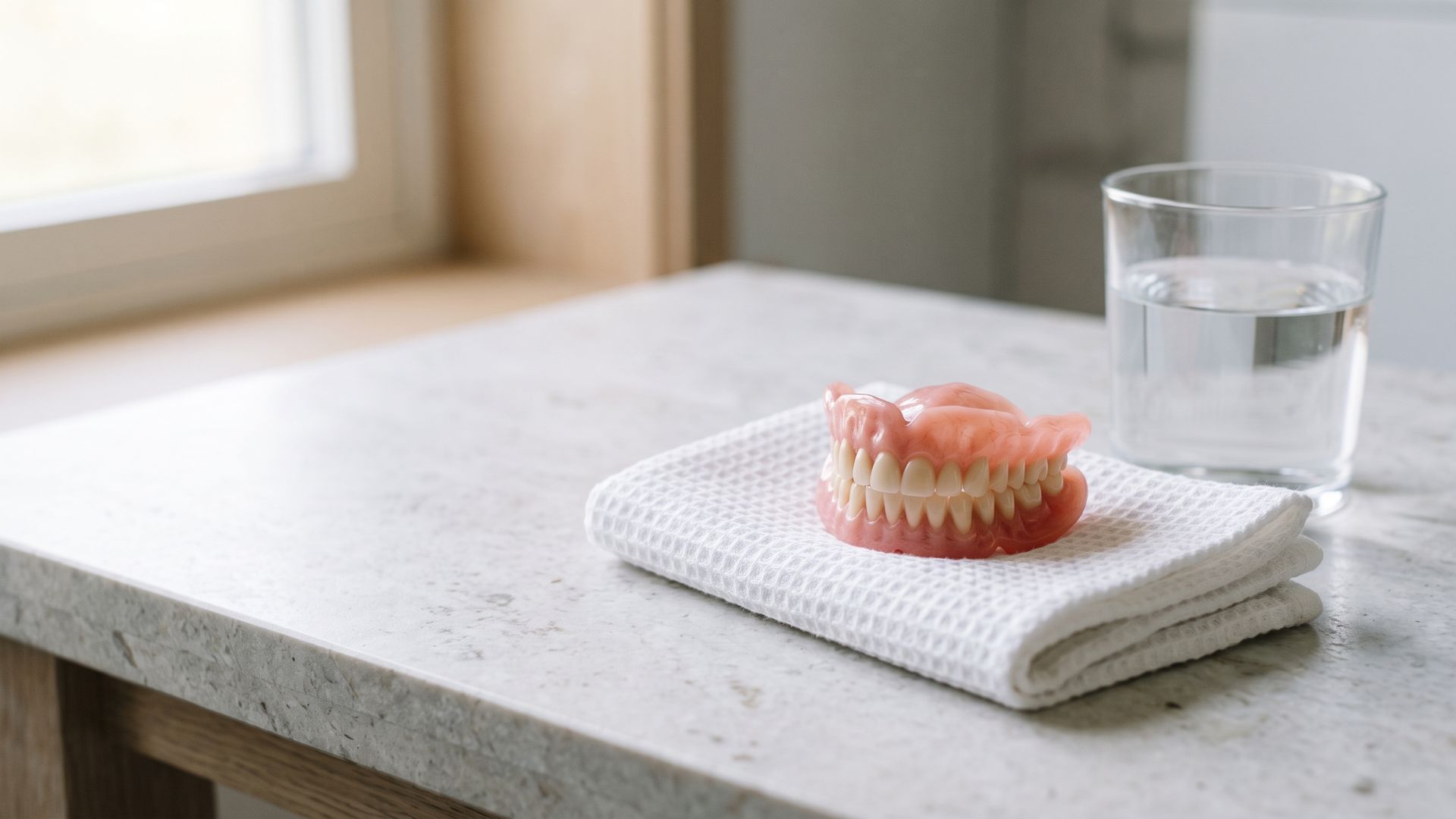
Dentures that fit beautifully on day one can start to slip, click or rock months or years later, and it catches many denture wearers off guard. Whether you wear full or partial dentures, the pattern is usually the same: a fit that quietly changes over time. If you have found yourself pressing your dentures back into place mid-sentence, or quietly choosing softer foods because chewing has become unpredictable, you are dealing with one of the most common problems in denture wearing, and one of the most fixable.
So, why do dentures come loose? Almost never because of anything you did wrong. The causes sit quietly in how mouths change after tooth loss, and once you understand them, the fixes, from a simple reline through to implant support, start to make a lot more sense.
Why Do Dentures Become Loose?
Dentures do not usually loosen for a single reason. It is more often a slow combination of changes in your mouth and changes in the denture itself.
Bone resorption: the most common reason
This is the part that often goes unexplained, so it is worth setting out properly: once natural teeth are lost, the jawbone that once held them begins to shrink. The process is called bone resorption, and it happens because the bone no longer receives the stimulation that tooth roots used to provide. Landmark research following denture wearers over 25 years found that this loss of jaw structure continues throughout life, gradually and at different rates in different people, with the lower jaw typically shrinking faster than the upper.
Your denture base was moulded to the exact shape of your gums and jaw on the day your impressions were taken. The denture keeps that shape. Your mouth does not. As the bone and gum tissue slowly change underneath, gaps open up between the fitting surface and your gums, and what was once a snug fit becomes a loose one. This is why dentures become loose even when they are cared for perfectly, and why the problem tends to creep in rather than arrive overnight.
Everyday wear and tear
Dentures work hard. Thousands of chewing cycles, daily cleaning, the occasional drop on the bathroom bench: over the years, normal wear and tear degrades the acrylic denture base and the teeth themselves. Worn denture material grips less precisely, hairline damage can compromise stability, and as a general guide most dentures give at least five years of service, and complete dentures last around ten years on average, before they need professional attention or replacement. One thing worth knowing early: trying to repair a cracked or ill fitting denture with a home repair kit usually makes things worse, and can damage the denture beyond saving.

Changes in your body and mouth
Your dentures fit your mouth, so anything that changes your mouth changes the fit. Significant weight loss can alter the shape of your gums and facial structure enough to loosen a previously comfortable denture. Dry mouth, whether from medication or age, reduces the thin film of saliva that creates the suction helping an upper denture stay in place. Even the natural ageing of gums and soft tissues plays a part, since gums and bone both shrink as you age.
What Problems Can Loose Dentures Cause?
A wobbly denture is annoying, but the real reasons to act go beyond annoyance. Food can get stuck underneath loose dentures, and trapped food plus movement is a recipe for gum tissue irritation, inflammation and sore spots. Constant rubbing can produce mouth sores that make wearing the denture painful, and trapped debris contributes to bad breath even with regular cleaning.
Then there is eating itself. Ill fitting dentures make chewing unpredictable, so many people quietly retreat to softer foods, and over an extended period that can narrow what should be a balanced diet. Speech can suffer too, since a denture that shifts changes how words form.

The quietest problem is the most important one. Dentures that rock and press unevenly can accelerate bone loss in the jaw, which means the loose fit that started the trouble gets steadily worse the longer it goes unaddressed. Loose dentures are worth fixing early, for your comfort today and your oral health years from now.
How Can Loose Dentures Be Fixed?
The right fix depends on why your dentures are loose, which is why a professional evaluation comes first. These are the usual paths.
What happens at the appointment?
If you have been putting this appointment off, you are in familiar company, and there is no lecture waiting for you. The visit itself is straightforward: your dentist or prosthetist looks at how the denture sits against your gums, checks whether the shape of your gums and the bone beneath them has changed, and assesses the denture itself for wear and damage. Around 30 minutes is typical.
From there, you get a written plan setting out your options, the costs and the reasoning, whether that points to an adjustment, a reline or something more. Nothing is decided in the chair unless you want it to be.
Is a denture reline the answer?
Often, yes. A denture reline reshapes the fitting surface of your existing denture so it matches the current shape of your gums. The process involves taking a fresh impression of your gums, then adding a new layer of material to the denture base for a better fit. A hard reline uses a new layer of acrylic and suits most situations, while a soft reline uses a more cushioned material that can be kinder to sensitive or receding gums. As a general guide, dentures benefit from relining every two years or so, though your own dentist or dental prosthetist will judge the timing by how your mouth is changing. At Dental Fresh, relines and adjustments are handled by our team in the on-site lab, which keeps the turnaround short.
Can denture adhesive fix loose dentures?
Denture adhesive has a place, but a smaller one than the advertising suggests. It can add confidence to a well-fitting denture for a big occasion, and it can tide you over until an appointment. What it should not become is a daily workaround for an improper fit, because adhesive masks the problem while the changes underneath continue. Treat it as a short term solution and book the appointment.
When are implant-supported dentures worth considering?
If relines are needed more and more often, or a lower denture simply will not stay put, implant-supported dentures are worth a conversation. A small number of dental implants placed in the jawbone act as anchors that the denture clips onto, giving improved stability that suction alone cannot match. Lower dentures benefit most, since the lower jaw offers less surface area for suction in the first place. Implants also stimulate the jawbone the way tooth roots once did, which helps slow further bone loss. No denture is a set-and-forget permanent solution, but implant support offers greater stability than suction alone, which is why it is often discussed with people whose lower dentures will not stay put.
Wrapping Up: When to Book a Professional Evaluation
So that is the picture: dentures loosen mostly because mouths keep changing after tooth loss, a little because dentures age, and the fix ranges from a simple reline to implant support depending on where things stand. The signals worth acting on are straightforward. Dentures that slip when you talk or laugh, new sore spots, food working its way underneath, or a fit that needs adhesive just to get through the day all deserve a look, and regular dental check-ups catch fit changes before they become uncomfortable.
The encouraging part is that none of this is a dead end. A denture that has served you well can usually be brought back to a comfortable, secure fit, and if it cannot, you will know your options clearly before deciding anything. If your dentures feel loose and you would like a proper assessment, book your consultation with Dental Fresh or call us on (02) 9389 3656, and the team will talk you through what is going on and what would genuinely help.
Talk it through with the team
Frequently Asked Questions
How often should dentures be relined?
As a general guide, every two years, though it varies with how quickly your gums and jawbone are changing. If your dentures feel loose sooner, do not wait for a schedule; changes in fit are worth assessing when you notice them.
Can I fix loose dentures at home?
No, and home repair kits or glues can permanently damage the denture material. Adjusting the fit safely requires an impression of your gums and proper materials, so leave relines and repairs to a dentist or dental prosthetist.
How should I clean and care for my dentures?
Remove and rinse your dentures after eating, and brush them daily with a soft bristled brush and a denture cleanser rather than regular toothpaste, which can be abrasive. Take them out overnight to give your gums a rest, and soak them in a denture cleaning solution only for the time the manufacturer recommends, storing them in cool water otherwise so the denture material does not dry out or warp; never use hot water. Clean your gums, tongue and any remaining natural teeth as well, since healthy oral tissue is what your dentures rest on.
Why is my lower denture looser than my upper one?
The upper denture covers the palate, which creates strong natural suction. The lower jaw offers a much smaller surface, has to share space with your tongue, and tends to lose bone faster, so a lower denture relies far more on precise fit. That is also why implant support helps lower dentures most.
Is it normal for new dentures to loosen in the first year?
If your dentures were fitted soon after teeth were removed, yes. Gums and bone change most rapidly in the months after extractions, so early relines are a normal part of the process rather than a sign anything went wrong.
Do loose dentures damage your gums or jaw?
They can over time. Movement irritates gum tissue and creates sore spots, and uneven pressure can speed up bone loss in the jaw. Both are good reasons to have loose dentures adjusted promptly rather than putting up with them.
Note: Any surgical or invasive procedure carries risks. Before proceeding, you should seek a second opinion from an appropriately qualified health practitioner.
References
- Cleveland Clinic. (2020). Denture care. https://my.clevelandclinic.org/health/articles/10901-denture-care
- National Health Service. (2025). Bad breath. https://www.nhs.uk/symptoms/bad-breath/
- Tallgren, A. (1972). The continuing reduction of the residual alveolar ridges in complete denture wearers: A mixed-longitudinal study covering 25 years. The Journal of Prosthetic Dentistry, 27(2), 120–132. https://doi.org/10.1016/0022-3913(72)90188-6


