Noticing a small white mark on a tooth you see every day in the mirror isn't unusual, and it's rarely a cause for concern. White spots on teeth show up for several different reasons, and what actually helps depends on which one is behind yours.
Some have been there since childhood and only become noticeable in certain light. Others develop more recently and may be worth discussing with your dentist.
Here's what tends to cause them, why teeth whitening sometimes seems to make them more obvious rather than less, and the options worth asking about at your next check-up.
What Causes White Spots on Teeth?
A white spot is usually a patch of enamel that holds less calcium than the tooth around it, a change dentists call hypocalcification. Because that patch reflects light differently to healthy enamel, it reads as lighter rather than darker, which is the opposite of what most people expect from tooth damage. The patch itself can be smooth or slightly rougher to the tongue than the surrounding enamel, and its size and shade can vary quite a bit from one person to the next.
When It's Fluorosis
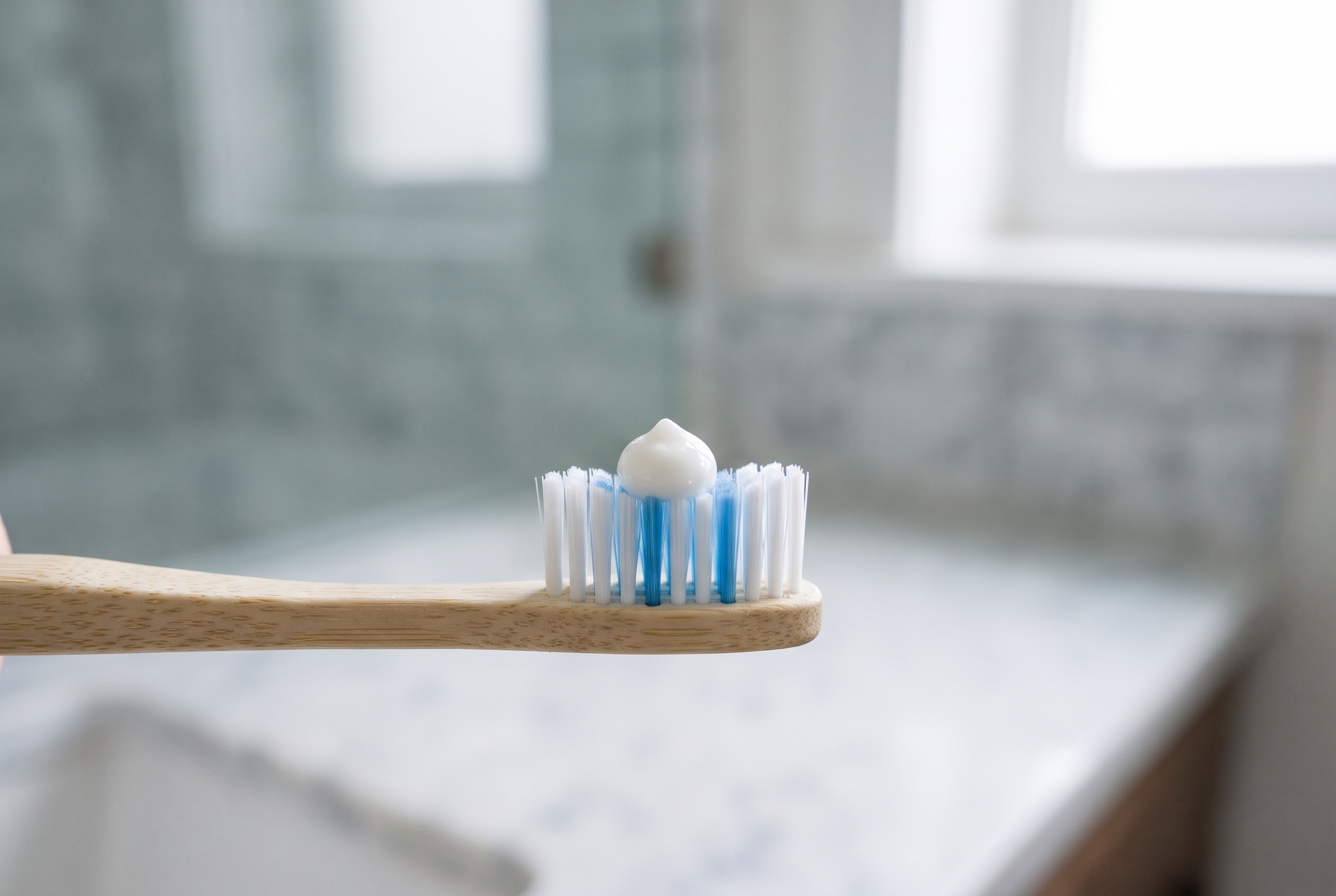
One possible cause is dental fluorosis, a harmless change in the appearance of enamel that develops while teeth are still forming. It happens when a child takes in more fluoride than their developing teeth need, most often from swallowing fluoride toothpaste, though community water fluoridation at standard Australian levels can also play a small part. The marks it leaves range from faint white flecks to more noticeable patches, and they're set once the adult teeth have come through, so nothing that happens afterwards changes how they look. Most fluorosis seen in Australia is mild and isn't of cosmetic concern. This is one reason we recommend only a pea-sized smear of toothpaste for young children, and supervising brushing until they're reliably spitting rather than swallowing.
Whether It's Plaque, Diet Or Braces
Other white spots form later, closer to the surface, when plaque is left sitting on a tooth for too long. The acid that plaque bacteria produce dissolves the minerals in tooth enamel, leaving a chalky patch behind, often right along the gum line or wherever a toothbrush tends to miss. Frequent exposure to sugary or acidic food and drink can make the same process more likely, since it gives the bacteria in plaque more to work with throughout the day.
Anyone who's worn braces will recognise this pattern too: brackets and wires make the usual brushing routine harder to keep up, and the square of enamel around each bracket is sometimes exactly where white marks turn up once they come off.
This type of white spot is also the earliest visible stage of tooth decay, which is part of why it's worth having a new spot checked rather than assuming it's harmless. The Australian Dental Association describes this early mark as a sign that tooth decay has been caught and stopped before a cavity develops. Think of it as an early warning sign. When identified early, these areas can often be stabilised with good oral hygiene and fluoride, possibly preventing the need for more invasive treatment.
Why Do White Spots Show Up More After Whitening?
It can be surprising to notice white spots after a whitening treatment, especially if you hadn't paid much attention to them before. In most cases, the whitening hasn't created anything new. Instead, it has brightened the surrounding enamel, making existing areas of lower mineralisation easier to see.
That's the honest caveat worth knowing before any whitening treatment: if you already have white spots, whitening can make them temporarily more obvious rather than less, at least until they're addressed separately. It's one of the first things our team at Bondi Junction talks through with anyone considering whitening who mentions existing marks, so there's no surprise afterwards. It's also why we'll usually suggest a quick look at any visible spots before booking a whitening appointment, rather than after, so you know what to expect from the result.

How To Get Rid Of White Spots On Teeth
White spots don't tend to fade on their own, so what helps depends on how they got there in the first place and how noticeable they are to you.
Start With A Check-Up
A regular check-up is where this usually starts, since it's the easiest way to tell a stable white spot from early decay that needs attention sooner. We'll look at the spot's shape, texture and where it sits on the tooth, since those details often say more about its cause than colour alone. Professional fluoride application at these visits can help remineralise weaker patches of enamel over time, particularly in younger patients whose teeth are still developing, although it won't change marks that are already fully formed. For a newly noticed spot that turns out to be early decay, this is also the point where it's easiest and least invasive to manage.
Composite Bonding For Smaller Marks
For a single spot or just a few, composite bonding is often the straightforward option. A tooth-coloured resin the colour of your own tooth is matched to the surrounding enamel and built up over the mark in one visit, blending it into the rest of the tooth rather than covering the whole surface. It's a conservative approach in the sense that very little of your natural tooth structure needs to be touched, which is part of why it's often the first thing we suggest for isolated marks.
Porcelain Veneers For More Extensive Cases
Where white spots are more widespread, affect several teeth, or are difficult to blend with bonding alone, porcelain veneers may be recommended. Veneers are thin porcelain shells that cover the front surface of the teeth and can improve both colour and shape. Because treatment usually involves removing a small amount of enamel, it's considered a long-term decision.
At Dental Fresh, veneers are custom made in our on-site laboratory, allowing close collaboration between your dentist and our technicians. Adjustments can often be made more quickly and efficiently, making treatment smoother from start to finish.
Everyday Habits That Help
Whatever's behind the spots, a few daily habits make new ones less likely to form. Brush twice a day with a pea-sized amount of fluoride toothpaste, then spit it out without rinsing, so the fluoride stays on your teeth a little longer. After sugary or acidic food and drink, a quick rinse with water helps. Keep up with flossing, especially in the places a toothbrush struggles to reach, like around braces or between tightly spaced teeth. None of this changes a spot that's already there, but it's the simplest way to stop a new one turning up.

Wrapping Up
White spots don't all have the same cause, which is why there isn't a single solution. Some may have been there since childhood, some are related to enamel development, and others can be an early sign that a tooth needs some attention. The only way to know the difference is to have them properly assessed rather than trying to work it out yourself. Whatever the cause, maintaining good daily oral hygiene and regular dental check-ups remains the most effective ways to protect your teeth and reduce the risk of new problem areas developing.
Curious what's behind yours? Book your first consultation with Dental Fresh, or call us on (02) 9389 3656.
A quick check-up is the easiest way to find out.
Book your first consultationFrequently Asked Questions
Are white spots on teeth a sign of a cavity?
Not usually, though it's worth having checked. A white spot on its own is typically a difference in enamel density rather than active decay, but very early decay can also start out looking pale before it darkens, which is exactly why a dentist's look matters more than guessing from a mirror.
Can toothpaste or whitening strips remove white spots at home?
Not reliably. Whitening products lighten the tooth generally rather than targeting one patch specifically, so they can make a white spot stand out more rather than less, for the same reason professional whitening can.
Do white spots from fluorosis get worse over time?
No. Fluorosis is set once the adult tooth has fully formed, so the marks it leaves don't spread or deepen afterwards. Whether they seem to change over the years mainly comes down to staining around them, not the fluorosis itself.
Will my white spots come back after bonding or veneers?
The mark itself is covered rather than cured, so it won't resurface through the bonding or veneer material. New white spots can still form elsewhere if the original cause, such as plaque buildup, isn't addressed alongside the cosmetic fix.
Is it worth treating white spots if they don't bother me?
That's a personal call, and plenty of patients choose to leave cosmetic-only marks alone. It's worth mentioning at a check-up regardless, mainly so your dentist can confirm there's nothing underneath worth monitoring.
References
- Australian Dental Association. (2023, March). Policy statement 2.2.1: Fluoride use. https://ada.org.au/policy-statement-2-2-1-fluoride-use
- Australian Dental Association. (n.d.). Tooth decay. Teeth.org.au. https://www.teeth.org.au/tooth-decay
- National Health and Medical Research Council. (n.d.). Water fluoridation and human health in Australia [Information paper]. https://www.nhmrc.gov.au/about-us/publications/water-fluoridation-dental-and-other-human-health-outcomes